Understand how PQP is calculated, what you’ll pay to renew your COE, and the key rules to know before deciding between a 5-year or 10-year renewal.

PQP (Prevailing Quota Premium) is the amount you pay LTA to renew your COE. You do not have to bid for it. It is calculated using the average of the COE prices from the last three months (six bidding exercises in total) and is updated every month. A 10-year renewal will cost the full PQP. A 5-year renewal will cost 50% of the PQP.
LTA has saved you the headache of heading into the COE bidding madness and instead lets you pay a fixed sum known as the PQP. This lets renewing owners pay a known, formula-based price and allows the predictable renewal of your vehicle instead of taking your chances on a new COE bid. So instead of paying the Quota Premium (QP), which is what bidders pay for brand new COEs, renewers enjoy the PQP.
Put simply, the PQP is just the trailing average of past COE prices. As of August 2026, PQP for Cat A stands at $125,646 - with Cat A bids closing at $123,315 in July's second tender. This has firmly put COEs in six-figure territory, and prices are unlikely to fall below $100,000 anytime soon.
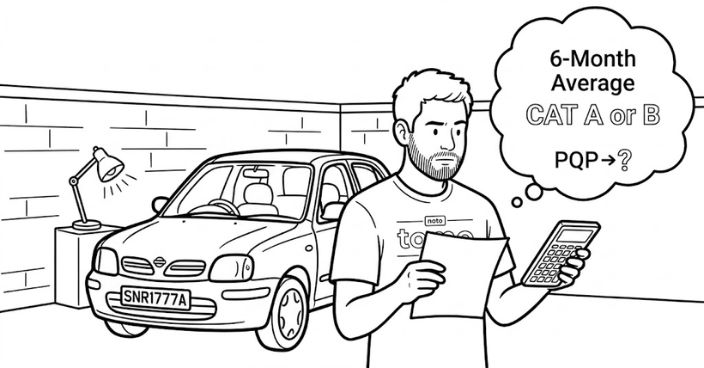
PQP = the average of the Quota Premiums from all COE bidding exercises in the past three months in which bidding took place. There are two exercises a month, so six results feed each month's figure. If no bidding took place in a given month, the calculation reaches further back to the most recent months that did have bidding.
An illustrative Cat A example: if the six exercises from May to July closed at $122,000, $123,500, $124,000, $125,000, $125,500 and $126,000, August's PQP would be their average - $124,333.
Because it's a trailing average, PQP lags the live market. When COE prices fall, PQP will stay higher than current COE prices for a while, sometimes for months. But when COEs climb, the PQP will look like a bargain. The PQP is very much a live number, and your decisions need to be grounded in understanding your situation and looking at trends and numbers. If you want the best value, it is rarely as simple as just pressing renew online.
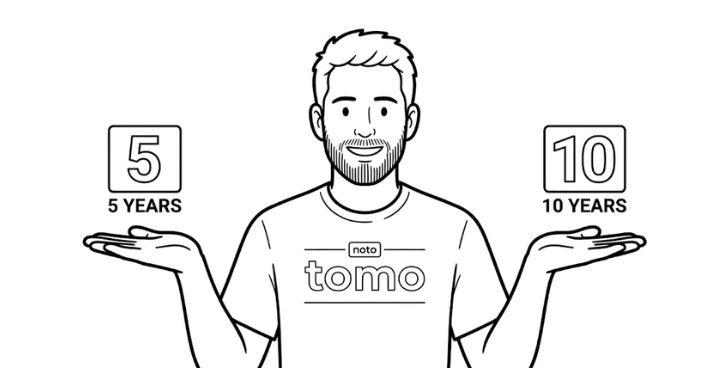
You have two options when it comes to renewals, and both use the same PQP figures. The amount you pay will depend on the years of renewal.
Do note: renewing your COE forfeits your PARF rebate and any unused COE value. So for cars on their first COE renewal, this is an additional cost you will need to take note of.
Also note: you must renew before expiry, or within one month after with a late fee of $50–$250 depending on engine capacity. If you miss the deadline by more than a month, you will have to scrap your car.
Not to LTA, as the PQP is due as a single upfront payment at renewal. That's where a COE renewal loan comes in: it spreads the six-figure PQP over up to seven years, and structured correctly it won't touch your TSDR or add to your vehicle's transfer count.
What is PQP for COE?
It is the fixed, formula-based price, calculated as a 3-month average of winning COE bids.
How many times can you renew your COE?
A 10-year renewal can be repeated indefinitely for Cat A, B and D vehicles, while a 5-year renewal is one-time only, and the car must be deregistered when it ends.
How much does it cost to renew your COE?
The current month's PQP for your category (or half of it for a 5-year renewal). Check LTA's monthly published rates - figures change every month.
A COE renewal has more moving parts than most owners expect - PQP timing, loan approval, insurance endorsement, road tax sequencing and, most of all, fronting the cash before claiming back from the bank. Any one of them out of order and you're paying a late fee or risking your renewal.
If you want the best rates without hitting your TSDR or adding to your transfer count, you can speak to noto's COE renewal loans team.








.svg)
.svg)
